
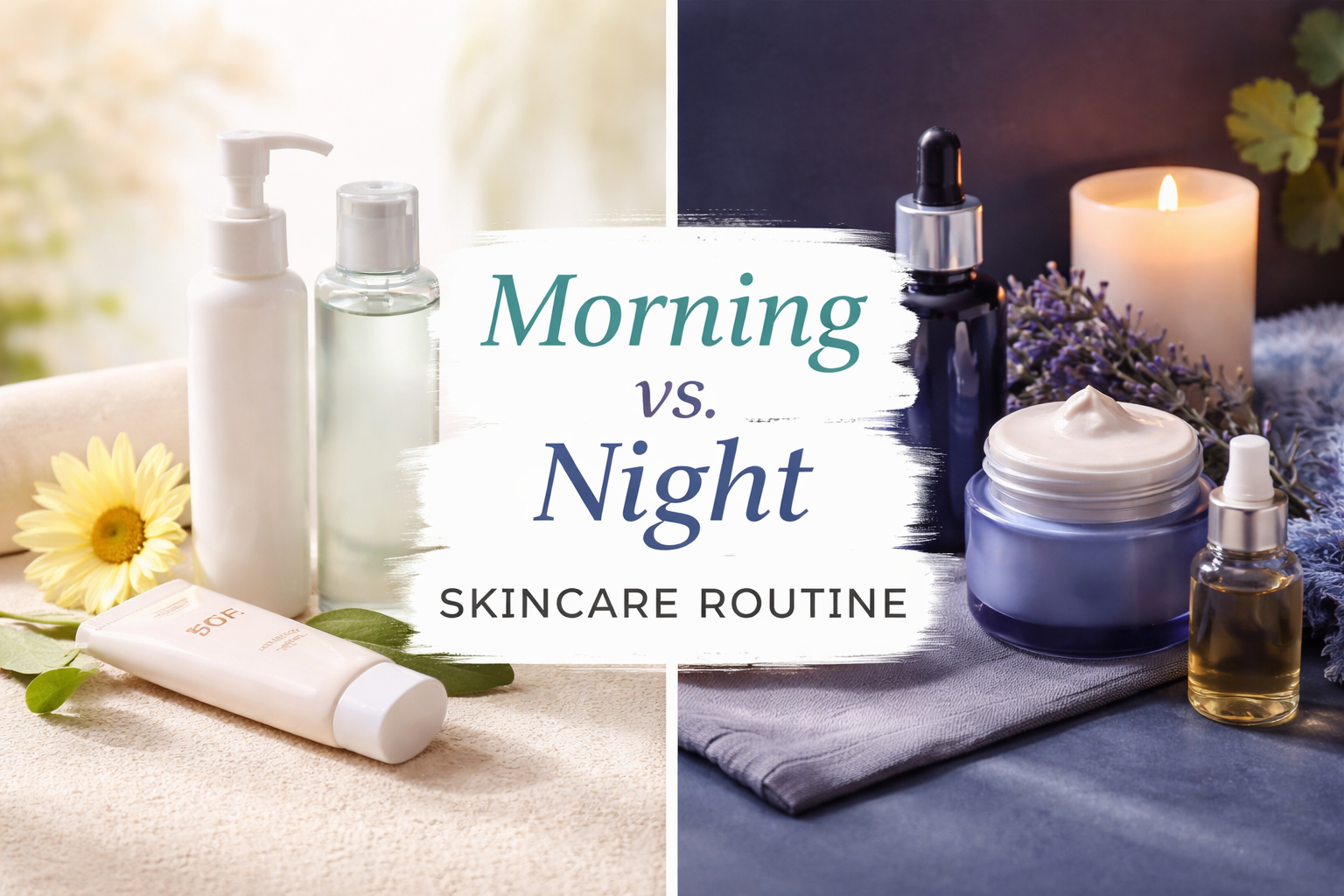
Skincare routines should adapt to the skin’s needs at different times of the day. Morning and night routines serve distinct functions and are not interchangeable. While the morning routine focuses on protection, the night routine supports recovery and regeneration. Understanding these differences is essential for effective and consistent skincare.

The Purpose of a Morning Skincare Routine
The primary goal of a morning routine is to protect the skin from external stressors such as UV radiation, pollution, and environmental dryness. Products used in the morning should support hydration and barrier function without overloading the skin.
- 1. Cleanser
Morning cleansing removes sweat and sebum accumulated overnight. A gentle cleanser is sufficient; harsh cleansing is unnecessary and may disrupt the skin barrier.
2. Toner
A hydrating toner replenishes moisture and prepares the skin for subsequent products.
3. Serum (Optional)
Lightweight serums can be used to address hydration or antioxidant support. Heavy or highly active formulations are generally avoided in the morning.
4. Moisturizer
Moisturizing locks in hydration and maintains barrier integrity throughout the day. Texture should be chosen based on skin type.
5. Sunscreen
Sunscreen is the most critical step of the morning routine. It protects the skin from UV-induced damage and premature aging.
Important: Sunscreen is always the final step of the morning routine.
The Purpose of a Night Skincare Routine
The night routine focuses on repair and regeneration. During sleep, the skin’s natural recovery processes are more active. This makes nighttime the optimal period for targeted treatments and richer formulations.
1. Cleanser
At night, cleansing removes sunscreen, makeup, and environmental pollutants. Double cleansing may be used if heavy products were applied during the day
2. Toner
As in the morning, toner restores hydration and prepares the skin for treatment products.
3. Treatment Products
Nighttime is ideal for serums or treatments targeting specific concerns such as dryness, uneven texture, or skin barrier support.
Note: Use only one active treatment at a time to reduce irritation.
4. Moisturizer or Night Cream
1. Cleanser
At night, cleansing removes sunscreen, makeup, and environmental pollutants. Double cleansing may be used if heavy products were applied during the day.
2. Toner
As in the morning, toner restores hydration and prepares the skin for treatment products.
3. Treatment Products
Nighttime is ideal for serums or treatments targeting specific concerns such as dryness, uneven texture, or skin barrier support.
Note: Use only one active treatment at a time to reduce irritation.
4. Moisturizer or Night Cream
Night creams are typically richer and help prevent moisture loss during sleep. This step supports skin recovery.
- 1. Cleanser
At night, cleansing removes sunscreen, makeup, and environmental pollutants. Double cleansing may be used if heavy products were applied during the day.
2. Toner
As in the morning, toner restores hydration and prepares the skin for treatment products.
3. Treatment Products
Nighttime is ideal for serums or treatments targeting specific concerns such as dryness, uneven texture, or skin barrier support.
Note: Use only one active treatment at a time to reduce irritation.
4. Moisturizer or Night Cream
Night creams are typically richer and help prevent moisture loss during sleep. This step supports skin recovery.
| Morning Routine | Night Routine |
| protection-focused | Repair-focused |
| Light texture | Richer textures |
| Includes sunscreen | No sunscreen |
| Minimal actives | Targeted treatments |
Morning and night skincare routines serve different but complementary purposes. A consistent morning routine protects the skin from daily stressors, while an effective night routine supports repair and long-term skin health. Adjusting skincare routines based on time of day improves product performance and overall skin condition.
